


Start with what is actually bothering you.
You do not need to know the name of the procedure. Find the sentence below that sounds like your situation — the treatment that fits follows from it.
I have missing teeth
There is more than one answer, and which one applies depends on how many teeth are gone and what the bone underneath is doing. A single missing tooth is usually a single implant — permanent, and it functions like the tooth it replaces. Several missing teeth may be an implant-supported bridge. An entire arch is a full-arch restoration on four to six implants. Every case is different, which is what the consultation is for.
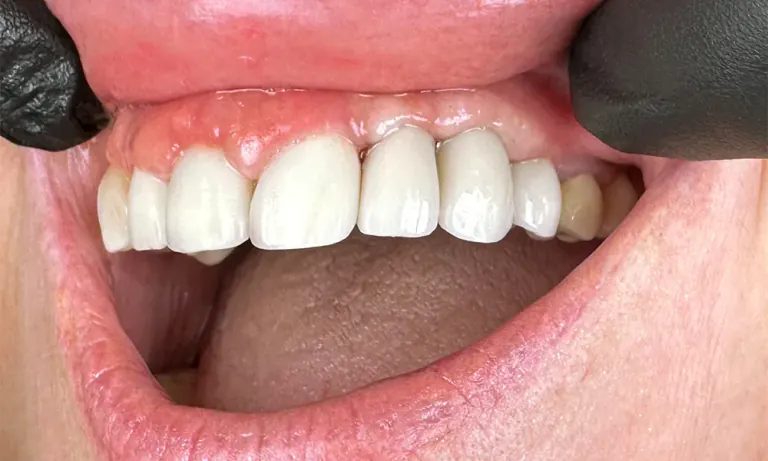
Upper left implants and crownsThree implants placed on the upper left, restored with individual crowns.See before and after → My gums bleed, or they are red, receding or swollen
Bleeding, redness, swelling, recession and persistent bad breath are the signs of periodontal disease. It is the leading cause of adult tooth loss and it is usually painless until it is advanced, which is why it goes unnoticed. Caught early it is very treatable — often with deep cleaning or laser therapy rather than surgery. The teeth you still have are worth keeping.
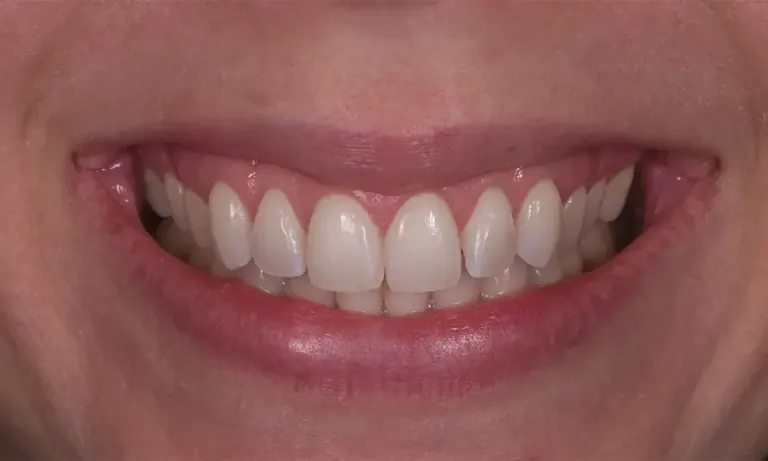
Gum graftingReceded gum tissue rebuilt to cover exposed tooth roots.See before and after → Too much gum shows when I smile
A "gummy smile" is usually a matter of proportion rather than disease — the teeth are the right size but too much gum tissue covers them, so they look short. Recontouring reshapes the gum line to reveal the natural tooth beneath, and is often finished with veneers where the shape of the teeth also needs work. It is a single planned procedure, not a course of treatment — distinct from laser gum treatment for periodontal disease.
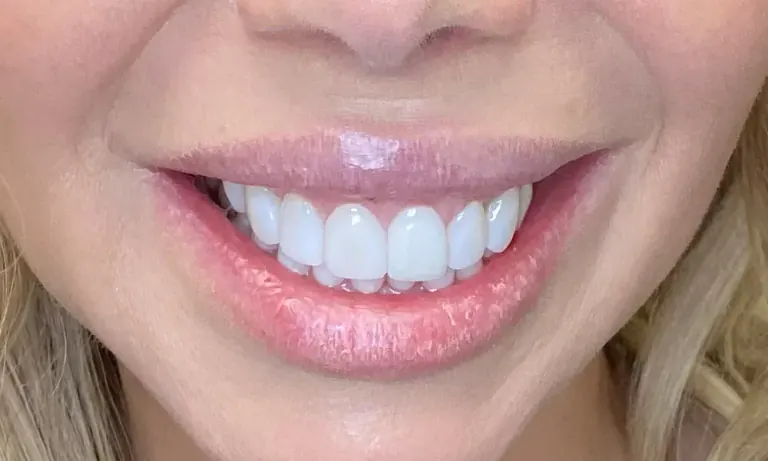
Gummy smile recontouring and porcelain veneersExcess gum tissue recontoured to reveal more of the tooth, finished with porcelain veneers.See before and after → I have difficulty chewing
Difficulty chewing usually means one of three things: teeth are missing and the bite has no support, teeth are loose because the bone holding them has been lost to periodontal disease, or a denture moves when it should not. All three are treatable, and the fix is different in each case — which is why the first appointment is an examination and a 3D scan rather than a quote.
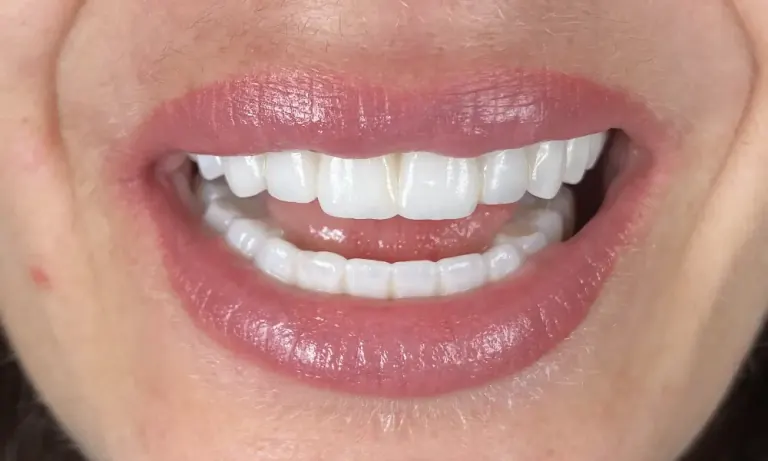
Full-mouth zirconia bridgesVery loose and failing teeth throughout the mouth, replaced with implant-supported zirconia bridges.See before and after → I want a full arch that looks like real teeth — not fake pink gums
That is FP1 territory: a full-arch restoration finished so gum and tooth look natural, without the artificial pink acrylic many full-arch bridges use. Not every jaw allows it — bone volume, lip line and the existing gum all matter — but when it does, the result reads as teeth rather than as dentistry. The consultation and 3D scan decide whether FP1 is the right finish for you.
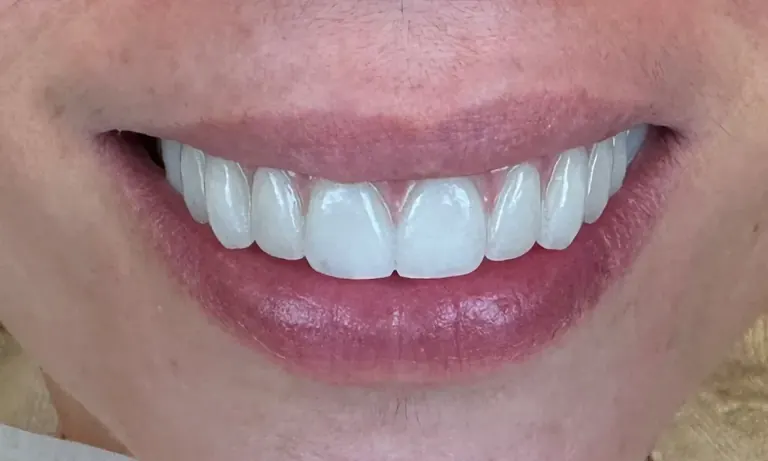
Upper All-on-X with zirconia, digital protocolA full upper arch restored using a digitally planned All-on-X zirconia bridge.See before and after → I have an infected or failing implant
Peri-implantitis is inflammation around an existing implant, with bone loss underneath it. The early signs are red or swollen gums, bleeding, and implant threads becoming visible. Left alone it ends in implant failure. Treatment ranges from professional cleaning and antibiotics to surgery, depending on how far it has gone — so the timing genuinely matters. We also repair and restore implants placed elsewhere.
Photographs are of actual ImplantWIDE patients and are published with their consent. Individual results vary; the outcome shown is not a guarantee of the result any other patient will achieve. Treatment suitability is determined by clinical examination.
Not sure how to describe it?
That is normal, and it is not a problem. Describe it however it comes out — we will work out what it is.
Ready when you are
Bring us the symptom, not the diagnosis.
The first appointment is an examination and a 3D scan. You leave knowing what is actually going on.