


06
Gum Grafts and Soft Tissue Reconstruction
Connective tissue grafting to protect exposed roots and strengthen thin gum.
Gum recession often progresses slowly and may not hurt — but exposed roots and thin gum tissue lead to sensitivity, wear, inflammation and longer-term risk to teeth or implants. Soft tissue grafting (connective tissue grafting) strengthens and protects those areas. The goal is long-term stability, not cosmetics alone.
Protect exposed roots
Grafting covers and thickens deficient gum so roots are less sensitive and less vulnerable to wear and decay.
Connective tissue grafting (CTG)
Healthy tissue is placed around teeth or implants with recession, thin gum, or minimal keratinized tissue.
Long-term stability
Once integrated, the graft creates stronger, more resilient soft tissue that helps protect teeth and implants.
Also supports FP1 finishes
Soft-tissue reinforcement is often part of full-arch plans that aim for a natural gum frame without fake pink acrylic.
Protecting your gums, preserving your smile
Gum recession is common and often progresses slowly. Soft tissue grafting — also called connective tissue grafting — is a predictable way to strengthen vulnerable areas before sensitivity, inflammation or implant complications become harder to manage.
In most cases the graft is taken from the roof of the mouth (autogenous tissue) or from a safe donor source, then placed where thickness and support are needed. Over time the graft integrates and becomes part of a healthier gum frame.
When grafting is recommended
- Recession or exposed roots
- Sensitivity, root wear, or an uneven gum line where tissue has pulled away from the tooth.
- Thin or minimal keratinized tissue
- Gum that is too thin to protect the tooth or implant long-term, even when it does not hurt yet.
- Around implants
- Soft-tissue support around existing or planned implants, including full-arch and FP1 cases.
- Evaluation first
- We measure recession, thickness and cause — disease, brushing trauma, or anatomy — before recommending a graft.
What the procedure is like
Connective tissue is placed to cover and thicken the deficient area. Exact technique depends on the site and how much tissue is needed. Soft tissue then needs time to integrate; post-operative instructions and follow-up keep the graft stable while it heals.
- Autogenous (palatal) or safe donor tissue, case by case
- Aimed at protection and stability as well as appearance
- Distinct from laser gum treatment for periodontal infection
Common questions
Why is gum grafting important?
Connective tissue grafting places healthy tissue around teeth or implants that have recession, thin gum, or minimal keratinized tissue. Once integrated, the graft creates stronger, more resilient gum that protects roots and implants over time.
Why do I need treatment if this does not hurt?
Recession is often painless while it progresses. Exposed roots and thin tissue still raise the risk of sensitivity, wear, inflammation and longer-term tooth or implant problems — which is why grafting is recommended before pain arrives.
Will my gums grow back on their own?
Lost gum does not reliably grow back to its original height and thickness without treatment. Grafting rebuilds the missing soft tissue rather than waiting for spontaneous recovery.
What happens if recession is left untreated?
Exposed roots can become more sensitive and worn; thin tissue is harder to keep healthy; and teeth or implants can face higher long-term risk. How urgent that is depends on the site — the consultation measures it.
Is a gum graft the same as laser gum treatment?
No. Laser gum treatment primarily addresses infected periodontal pockets. A gum graft rebuilds missing soft tissue over exposed roots or thin gum. Some patients need both at different stages; the consultation sequences them correctly.
Before and after
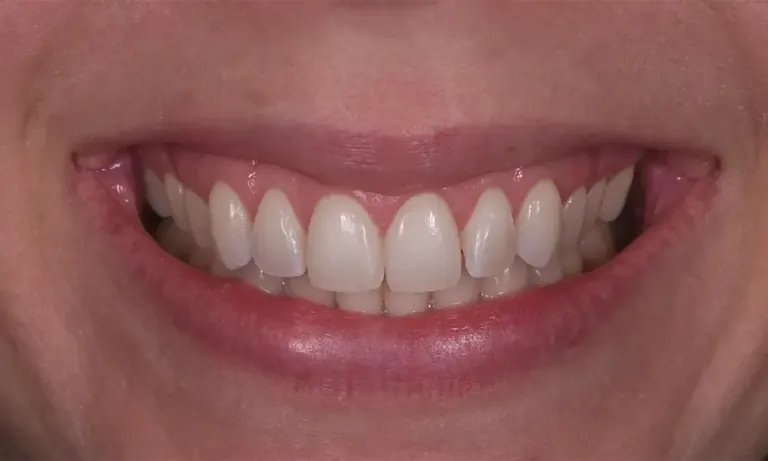 After
Gum grafting
Receded gum tissue rebuilt to cover exposed tooth roots.Before: Before treatment: receded gums exposing the roots of the teeth. After: After treatment: restored gum tissue covering the previously exposed roots.
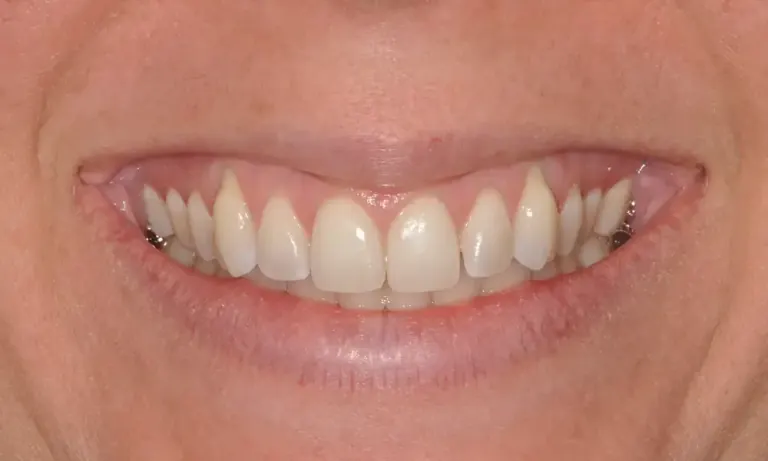
Photographs are of actual ImplantWIDE patients and are published with their consent. Individual results vary; the outcome shown is not a guarantee of the result any other patient will achieve. Treatment suitability is determined by clinical examination.
Want to know if this fits your case?
Call or book a consultation. Dr. Gromov will tell you what you need — and when the answer is less than you expected.
Call 630-912-2700Mon–Fri · 9am – 5pm